
Wiesen Test of Mechanical Aptitude (WTMA) Prep: 60 Questions, 30 Minutes, 6th-Grade Reading Level
The Wiesen is the test that proves mechanical intuition is not a language problem. Every item is written at a 6th-grade reading level on purpose, so the questions do not punish applicants with English as a second language or limited formal schooling. What they do punish is people who have never thought about levers, fluid flow, or gears before. Those candidates can get blown out in the first 10 questions, not because the math is hard but because the intuitions are unfamiliar. The Wiesen is a quick test of whether you can look at a machine and predict what it does next.
By PrepClubs Editorial Team, updated October 8, 2026
The Wiesen Test of Mechanical Aptitude (WTMA) is a 60-question, 30-minute mechanical reasoning test created by Joel Wiesen and distributed by Criteria Corp, PAR, Ramsay Corporation, and APR Testing Services. It uses 6th-grade reading-level language and simple schematic illustrations to test seven concept families: levers and basic machines, pulleys, gears and belt drives, gravity and balance, basic electricity, heat and fluid flow, and everyday physical properties. Entry-level operator roles cut at the 50th percentile; technician roles cut at the 70th.
Source: Joel Wiesen WTMA technical manual, Criteria Corp distributor documentation, and Ramsay Corporation licensing.
The deepest Wiesen WTMA bank online
Official facts checked 8 Oct 2026
How long is the Wiesen Test of Mechanical Aptitude and how many questions does it have?
The Wiesen Test of Mechanical Aptitude (WTMA) has 60 items and a 30-minute time limit, according to Criteria Corp, which delivers it online. That is 30 seconds per question. Ramsay Corporation sells the same 60-item, 30-minute test. Neither company publishes a list of content areas or a calculator rule.
Where the WTMA is sold
“It is a 30-minute, 60-item test that can predict performance for occupations involving the operation, maintenance, and servicing of tools, equipment, and machinery.”
“Reading level for the WTMA items is estimated to be at the sixth-grade level, and the WTMA is also available in a Spanish-language version.”
Which Wiesen WTMA practice tests are on PrepClubs, and how long is each one?
PrepClubs has 8 Wiesen WTMA practice tests: 8 full-length forms, 480 questions in all. Every one runs 60 questions on a 30-minute timer, 30 s per question.
The question count, time limit and question mix in each row are read from the question bank that runs the live tests, last on 8 Oct 2026, so each row matches what the test shows when you open it.
Showing 8 of 8 Wiesen WTMA practice tests
| Question mix | Calculator | Guide | |||||
|---|---|---|---|---|---|---|---|
| Wiesen WTMA Practice Test 1 Full-length | 60 | 30 min | 30 s | Mechanical aptitude 60 | Not allowed | Mechanical reasoning | |
| Wiesen WTMA Practice Test 2 Full-length | 60 | 30 min | 30 s | Mechanical aptitude 60 | Not allowed | Mechanical reasoning | |
| Wiesen WTMA Practice Test 3 Full-length | 60 | 30 min | 30 s | Mechanical aptitude 60 | Not allowed | Mechanical reasoning | |
| Wiesen WTMA Practice Test 4 Full-length | 60 | 30 min | 30 s | Mechanical aptitude 60 | Not allowed | Mechanical reasoning | |
| Wiesen WTMA Practice Test 5 Full-length | 60 | 30 min | 30 s | Mechanical aptitude 60 | Not allowed | Mechanical reasoning | |
| Wiesen WTMA Practice Test 6 Full-length | 60 | 30 min | 30 s | Mechanical aptitude 60 | Not allowed | Mechanical reasoning | |
| Wiesen WTMA Practice Test 7 Full-length | 60 | 30 min | 30 s | Mechanical aptitude 60 | Not allowed | Mechanical reasoning | |
| Wiesen WTMA Practice Test 8 Full-length | 60 | 30 min | 30 s | Mechanical aptitude 60 | Not allowed | Mechanical reasoning |
Sources
- Criteria Corp: Wiesen Test of Mechanical Aptitude (WTMA) (criteriacorp.com), checked 8 Oct 2026
- Ramsay Corporation: Wiesen Test of Mechanical Aptitude, online form (ramsaycorp.com), checked 8 Oct 2026
- PrepClubs question bank, the files behind the live Wiesen WTMA practice tests, read 8 Oct 2026
“Not published” means the publisher does not state that fact on any page we could find. We leave it blank instead of quoting a prep site.
What the WTMA is and who built it
The Wiesen Test of Mechanical Aptitude, known widely as the WTMA, is a 60-item mechanical reasoning test delivered in 30 minutes. It was created by Joel Wiesen and is now distributed by multiple test publishers: Criteria Corp uses it as part of their aptitude battery, PAR publishes the original PAR edition, Ramsay Corporation licenses it, and APR Testing Services resells it to industrial employers. The item bank is the same across distributors.
Every question presents a simple drawing of a mechanical situation and asks the test-taker to predict an outcome: which lever requires less force, which valve controls which flow, which pulley lifts a load faster, which gear stops when another gear is locked. The drawings are schematic and clean, similar to a middle-school science textbook illustration.
The 6th-grade reading level is deliberate. Wiesen designed the WTMA for entry-level hiring where applicants may be non-native English speakers or may have limited formal education past high school. The questions therefore test mechanical intuition in as language-neutral a way as possible while still being a written exam.
Concept families tested on every Wiesen WTMA
The WTMA does not split into formal sections. Questions pull from seven mechanical concept families, shuffled in random order across the 60 items.
Basic machines: levers, wedges, screws, wheels
Classic first, second, and third-class levers. Which side of a lever moves further, which side requires less effort. Inclined planes, screws, wedges. Usually 8 to 12 items.
Pulleys and lifting systems
Single fixed pulleys, single movable pulleys, and block-and-tackle arrangements. Counting supporting ropes is the core skill. 6 to 8 items.
Gears and belt drives
Which gear turns faster, which direction. Crossed belts reverse direction, uncrossed belts keep direction. 6 to 8 items.
Gravity and center of gravity
Which object tips over, which way a beam balances, where a ball rolls. The Wiesen has more of these than most mechanical tests. 6 to 10 items.
Basic electricity and electronics
Simple series and parallel circuits, battery polarity, what happens when a wire breaks. Lighter coverage, 4 to 6 items.
Heat transfer and basic fluid flow
Why metal feels colder than wood at the same temperature, which container loses heat faster, fluid flow through pipes of different diameters. 4 to 6 items.
Everyday physical properties
Why ice floats, why a deflating ball bounces lower, how friction changes with surface area. These items use consumer-level scenarios, not industrial machinery. 6 to 10 items.
Try a few Wiesen sample questions
Four representative mechanical reasoning items pulled from the free Wiesen practice test. Click to reveal the answer and walkthrough.
- A.25 N
- B.250 N
- C.51 N
- D.50 N
- E.10 N
- A.120 N
- B.53 N
- C.40 N
- D.80 N
- E.82 N
- A.75 N
- B.146 N
- C.150 N
- D.37.5 N
- E.600 N
- A.240 N
- B.30 N
- C.15 N
- D.120 N
- E.60 N
Real Wiesen WTMA-style question examples
Three representative items from the PrepClubs Wiesen bank. Mechanical reasoning items rely on schematic illustrations of levers, pulleys, and gear trains. The 60-item Wiesen will show roughly 40 to 50 image-based questions across the seven concept families.
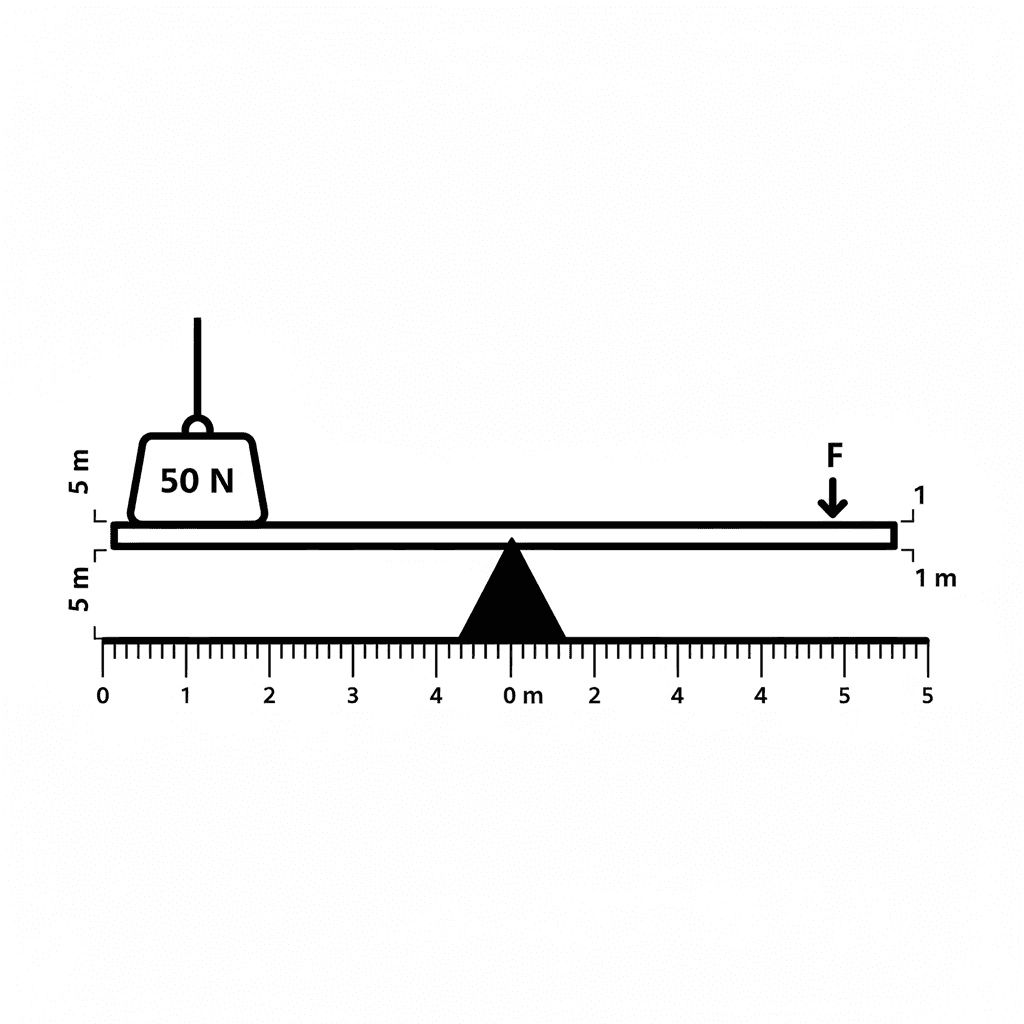
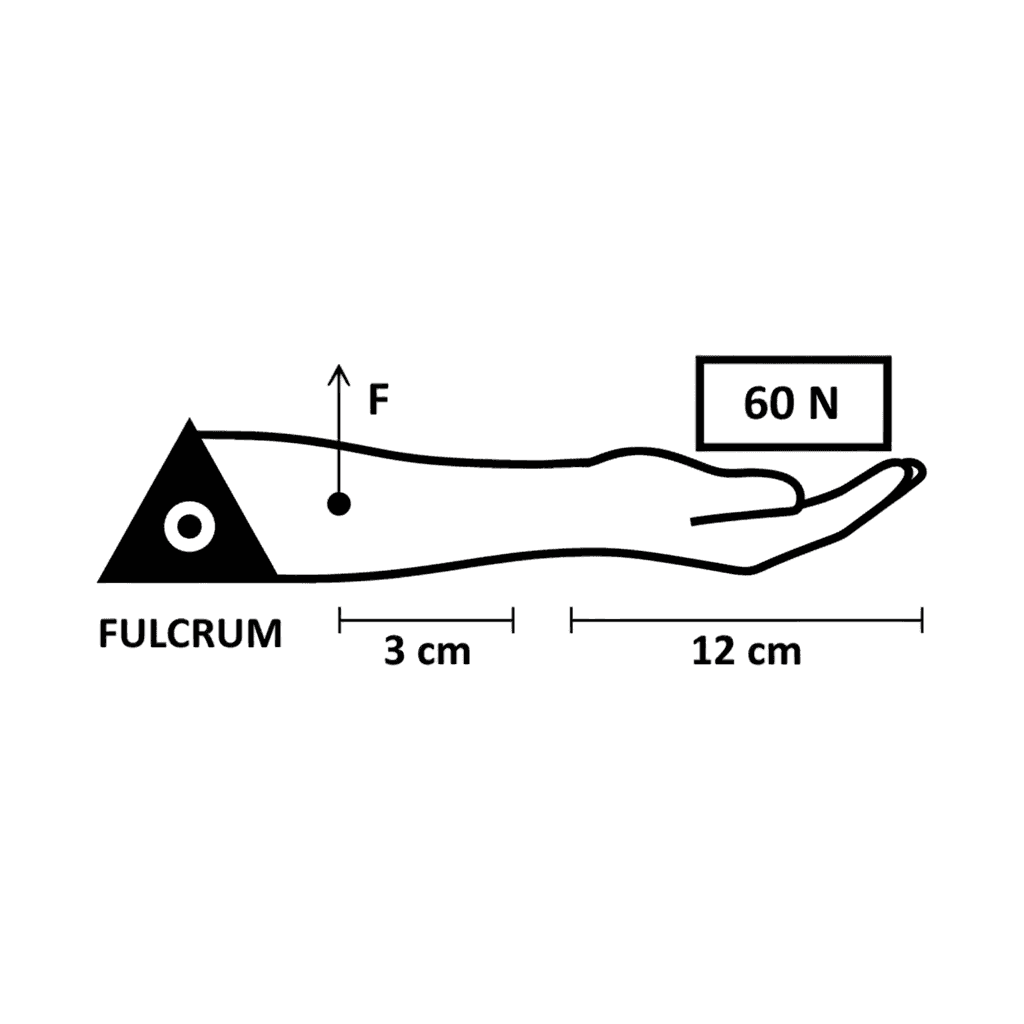
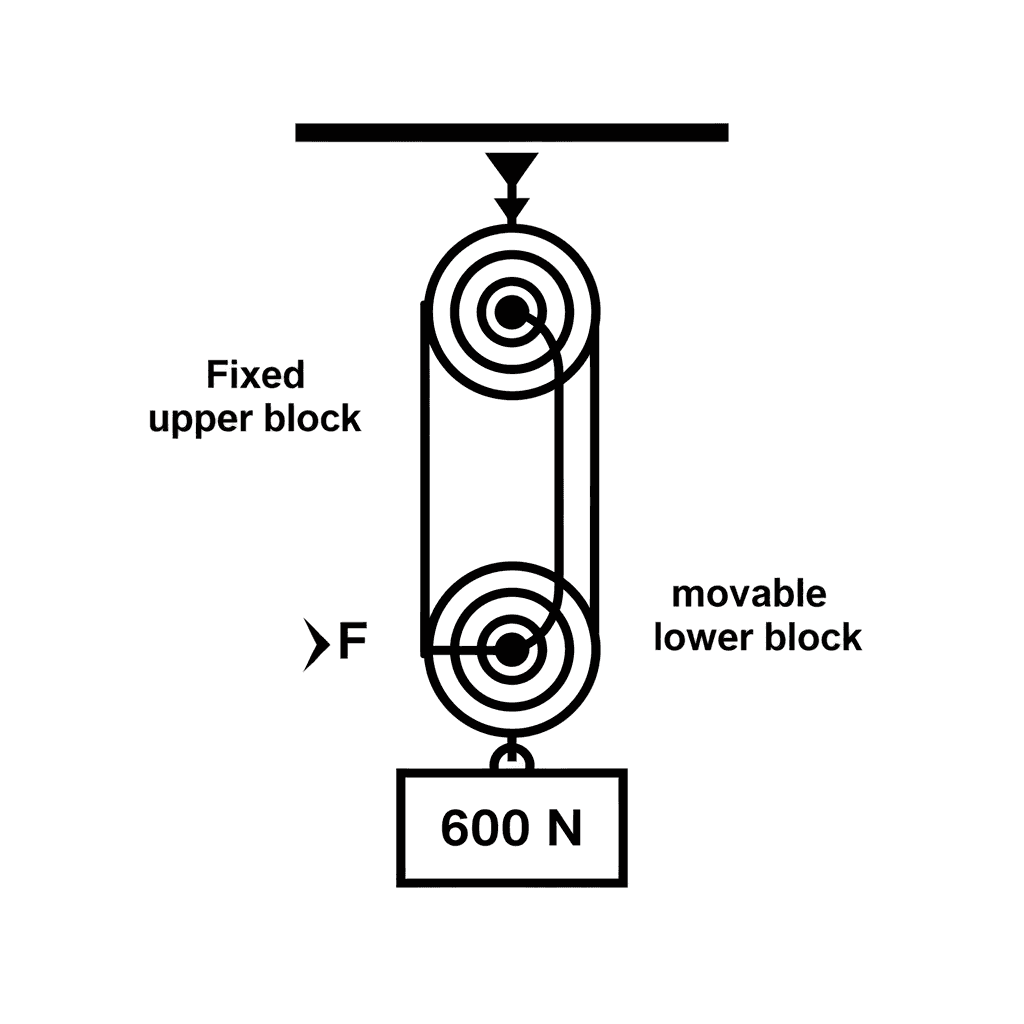
PrepClubs ships 480+ Wiesen-style mechanical reasoning questions, the largest free-and-paid bank we have found online. JobTestPrep ships under 200 Wiesen-specific items.
Wiesen WTMA vs Bennett vs Ramsay MAT: which mechanical test are you actually taking?
These three mechanical reasoning tests look identical from a distance. The differences matter because the right prep depends on the right test.
| Spec | Wiesen WTMA | Bennett BMCT-II | Ramsay MAT |
|---|---|---|---|
| Questions | 60 | 55 | 36 |
| Time limit | 30 min | 25 min | 20 min |
| Reading level | 6th grade | About 6th grade | 8th grade |
| Calculator allowed | No | No | No |
| Question style | Schematic line drawings | Color drawings, three choices | Schematic plus text |
| Concept families | 7 | 12 | 4 |
| Heaviest employer pool | Manufacturing operators, transit, utilities | Mechanical, technical and engineering jobs | Maintenance technician, skilled trades |
| Distributor | Criteria Corp, PAR, Ramsay, APR | Pearson TalentLens | Ramsay Corporation |
| PrepClubs questions | 480+ | 440 | 288+ |
Why employers pick the Wiesen over the Bennett: the language-fairness story
The 6th-grade reading level is a hiring strategy, not a quality compromise
Joel Wiesen designed the WTMA for industrial employers who wanted a mechanical screen that kept vocabulary out of the way, so that non-native English speakers, tradesmen with limited classroom education, and candidates from underfunded school systems would be judged on mechanical reasoning rather than on reading.
Wiesen normed the WTMA to test mechanical intuition with the simplest English the test could carry. The result: a test with comparable predictive validity to the Bennett but with materially lower adverse-impact metrics on demographic subgroups. EEOC-conscious employers picked this up immediately.
The WTMA is now the default mechanical screen for employers with high diversity in their applicant pool: transit authorities, public utilities, large manufacturers in the South and Midwest, and any employer whose recruiting funnel skews ESL.
Why Criteria Corp distributing the WTMA changed the test forever
Until Criteria Corp licensed the WTMA from its publisher in 2007, the test was a paper-administered niche product. Criteria pushed it onto their HireSelect platform, integrated WTMA scoring into their broader cognitive battery, and let employers bundle the WTMA with the CCAT in a single hiring flow.
This is why you see employers asking for "the Criteria mechanical test" without specifying. They usually mean the WTMA. Criteria now also publishes its own Criteria Mechanical Reasoning Assessment (CMRA), so ask which one you are sitting.
The Criteria delivery layer also added strict 30-minute clock enforcement. Earlier paper administrations sometimes ran loose on time. The Criteria platform does not. If the test takes 30 minutes, you get exactly 30 minutes, not 31.
The percentile maps that decide whether you advance
Wiesen reports your raw correct out of 60 plus a percentile rank against a role-specific norm group. Norm groups exist for entry-level operator, maintenance technician, mechanic, and supervisor roles. The same raw 40 maps to wildly different percentiles across these four norm groups.
Operator norm group: a raw 40 is around the 75th percentile. Easily passable for most operator cuts.
Maintenance technician norm group: a raw 40 is around the 60th percentile. Borderline for many maintenance cuts.
Mechanic norm group: a raw 40 is around the 55th percentile. Marginal for most mechanic roles.
Supervisor norm group: a raw 40 is around the 45th percentile. Below the typical supervisor cut.
Practical implication: candidates interviewing for mechanic and supervisor roles should target a raw 45, not 40. The 5-question difference is the difference between advancing and screening out.
Build the rest of your prep stack
WTMA scoring: raw score plus percentile rank
The Wiesen returns two numbers: a raw score of correct items out of 60, and a percentile rank comparing the candidate to a norm group that matches the role. Norm groups are role-specific, which matters. A raw score of 40 correct might be the 70th percentile among general-population candidates and only the 40th percentile among a norm group of experienced maintenance technicians.
There is no wrong-answer penalty. Guess on every item you cannot solve within 20 seconds. Blanks cost the same as incorrect answers, so filling every bubble is free expected value. The 30-minute clock gives you exactly 30 seconds per item, which is why pacing is as much a skill on the Wiesen as concept knowledge.
Criteria Corp and other distributors package the WTMA with a recommended passing threshold that the employer sets. Typical entry-level operator roles cut at the 50th percentile. Technician roles at large manufacturers cut at the 70th percentile. Few roles cut higher than the 80th percentile because the WTMA is designed as a screen, not a ceiling test.
Who uses the Wiesen WTMA?
The Wiesen WTMA is used by Criteria Corp clients for technician, machine-operator, and maintenance roles across manufacturing, utilities, logistics, and transit. Employers value the 30-minute length and 6th-grade reading level for high-volume hiring.
A 7-day Wiesen WTMA prep plan
Day 1: Diagnostic and concept map
Take a 60-item timed mock cold. Identify the 2 concept families where you lost the most points. Read a one-page overview of each. Do not solve new problems yet.
Day 2: Levers, pulleys, and basic machines
Learn the two core rules. Levers: effort times distance equals load times distance. Pulleys: more supporting ropes equals less effort needed. 20 practice items, untimed. Review every wrong answer same day.
Day 3: Gears and belt drives
Smaller gear spins faster. Crossed belts reverse direction. Intermediate gears in a chain cancel out for the overall speed ratio. 15 items timed at 30 seconds each.
Day 4: Gravity, balance, and center of gravity
Wide base, low center of gravity equals more stable. Torque equals weight times distance from pivot. 20 items with mixed balance and tipping scenarios.
Day 5: Electricity, heat, fluids, and everyday physics
The lighter concept families. Series versus parallel circuits, which material conducts heat, fluid flow through different pipe sizes, friction basics. 25 mixed items.
Day 6: Full 60-item timed mock
30-minute clock. Do not pause. Record pacing at item 20 and item 40. If you are behind, you will know where your weak spots are. Most first-time candidates freeze at levers and pulleys around item 15 to 20.
Day 7: Error drill and rest
Redo every wrong answer from Day 6 untimed. Re-read the principle that each one tested. Then stop. No more new material. Sleep.
Three WTMA mistakes that drop percentile fast
Over-reading the question
The 6th-grade language is simple for a reason. If a question looks too easy, it probably is. Candidates who hunt for trick wording often talk themselves out of correct answers.
Spending more than 40 seconds on pulley problems
Pulley systems look intimidating but reduce to counting supporting ropes. 3 ropes means 1/3 the effort. 4 ropes means 1/4 the effort. Count and move.
Skipping the everyday-physics category
The household-scenario items (why ice floats, why metal feels cold) are often 6 to 10 of the 60 questions. Candidates who skip this category because it feels unserious lose a full stanine.
Related reading
Wiesen WTMA FAQs
A score tells you how you did. The coach tells you what to practice next.
After every test you get a short plan built from your own answers and seconds: which sections cost you points, which ones eat your clock, and the drill that fixes each.
Math: 11 of 12 right, at 31 s a question
Drill math against a 20 s clock. That frees about 2 minutes per test for the sections you miss more.
People who got the same questions right took 20 s.
Illustrative data
- Every section mapped on accuracy against speed, with one fix for each
- The questions that ate your time, and the clock checkpoints to hit next time
- Where rushing costs you, and the point to guess and move on
- A read that sharpens with every test you take
Your pacing report is free with your first test.
30 seconds per question. Build the intuition before the clock starts.
Timed 60-item WTMA simulations with concept-family feedback and percentile scoring.
Start prepping