
Ramsay Mechanical Aptitude Test (MAT-4) Prep: 36 Questions, 20 Minutes, 33 Seconds Each
The Ramsay Mechanical Aptitude Test is the short cousin of the Ramsay Maintenance test. Where the Maintenance test is a 60-question job-knowledge exam for experienced technicians, the MAT-4 is a 36-question mechanical aptitude test for entry-level candidates. 20 minutes, 33 seconds per question, heavy on diagrams, sparse on text. The national average is 25 correct. Candidates who want to rank competitively at major employers need 29 or better.
By PrepClubs Editorial Team, updated October 8, 2026
The Ramsay Mechanical Aptitude Test, widely known as the MAT-4 and now sold by Ramsay as Form MAT-5, is a 36-question, 20-minute mechanical reasoning screen published by Ramsay Corporation. It uses sparse diagrams to test pulleys, levers, gears, fluid dynamics, basic physics, and basic electricity, no computation required. The national average raw score is 25 of 36. Most major manufacturers and utilities use a cutoff around 29 (top 20 to 30 percent nationally). The MAT-4 is distinct from the longer Ramsay Maintenance test, which is a job-knowledge exam for experienced technicians.
Source: Ramsay Corporation (ramsaycorp.com) MAT-4 documentation and published industry norm tables.
Sparse-diagram drilling, not generic mechanical theory
Official facts checked 8 Oct 2026
How long is the Ramsay Mechanical Aptitude Test and how many questions does it have?
The Ramsay Mechanical Aptitude Test (MAT) has 36 multiple-choice items and a 20-minute time limit, according to Ramsay Corporation. That is about 33 seconds per question. Ramsay lists four content areas: household objects; work, production and maintenance; school, science and physics; and hand and power tools. The form on sale today is MAT-5, with Form B3 as its alternate.
Official Ramsay MAT forms
“The Mechanical Aptitude Test (MAT) is a quick 20-minute evaluation of a person's ability to learn production and maintenance job activities.”
“Unless we perform a job analysis and test validation study for you, we cannot recommend a specific cut score (passing score).”
Which Ramsay MAT practice tests are on PrepClubs, and how long is each one?
PrepClubs has 8 Ramsay MAT practice tests: 8 full-length forms, 288 questions in all. Every one runs 36 questions on a 20-minute timer, 33.3 s per question.
The question count, time limit and question mix in each row are read from the question bank that runs the live tests, last on 8 Oct 2026, so each row matches what the test shows when you open it. Ramsay now sells this test as Form MAT-5. The length and the time limit are the same 36 items and 20 minutes.
Showing 8 of 8 Ramsay MAT practice tests
| Question mix | Calculator | Guide | |||||
|---|---|---|---|---|---|---|---|
| Ramsay Mechanical Aptitude Test Practice 1 Full-length | 36 | 20 min | 33.3 s | Mechanical aptitude 36 | Not allowed | Mechanical reasoning | |
| Ramsay Mechanical Aptitude Test Practice 2 Full-length | 36 | 20 min | 33.3 s | Mechanical aptitude 36 | Not allowed | Mechanical reasoning | |
| Ramsay Mechanical Aptitude Test Practice 3 Full-length | 36 | 20 min | 33.3 s | Mechanical aptitude 36 | Not allowed | Mechanical reasoning | |
| Ramsay Mechanical Aptitude Test Practice 4 Full-length | 36 | 20 min | 33.3 s | Mechanical aptitude 36 | Not allowed | Mechanical reasoning | |
| Ramsay Mechanical Aptitude Test Practice 5 Full-length | 36 | 20 min | 33.3 s | Mechanical aptitude 36 | Not allowed | Mechanical reasoning | |
| Ramsay Mechanical Aptitude Test Practice 6 Full-length | 36 | 20 min | 33.3 s | Mechanical aptitude 36 | Not allowed | Mechanical reasoning | |
| Ramsay Mechanical Aptitude Test Practice 7 Full-length | 36 | 20 min | 33.3 s | Mechanical aptitude 36 | Not allowed | Mechanical reasoning | |
| Ramsay Mechanical Aptitude Test Practice 8 Full-length | 36 | 20 min | 33.3 s | Mechanical aptitude 36 | Not allowed | Mechanical reasoning |
Sources
- Ramsay Corporation: Mechanical Aptitude Test, Form MAT-5 (ramsaycorp.com), checked 8 Oct 2026
- Ramsay Corporation: Mechanical Aptitude Test, Form B3 (ramsaycorp.com), checked 8 Oct 2026
- Ramsay Corporation: proctoring instructions (help.ramsaycorp.com), checked 8 Oct 2026
- Ramsay Corporation: FAQ (ramsaycorp.com), checked 8 Oct 2026
- PrepClubs question bank, the files behind the live Ramsay MAT practice tests, read 8 Oct 2026
“Not published” means the publisher does not state that fact on any page we could find. We leave it blank instead of quoting a prep site.
What the MAT-4 actually measures
The Ramsay Mechanical Aptitude Test, now in its fourth major revision as the MAT-4, is a 36-item mechanical reasoning test delivered in 20 minutes. It is used primarily as an entry-level screen for utility, manufacturing, and industrial hiring where the employer wants a quick aptitude signal without the 60-question commitment of the full Maintenance test.
Every item presents a diagram of a mechanical situation and asks a single question about what happens next, which side requires more force, or which component moves first. The diagrams are famously sparse. Ramsay deliberately strips away detail to force candidates to reason from the mechanical principle rather than from real-world context. Question instructions are also deliberately brief, sometimes ambiguous, which trips up candidates used to more verbose exam language.
The MAT-4 does not test job knowledge. You do not need to know what a check valve is called or how often to grease a bearing. You need to predict which pulley lifts a load faster, which lever tips the beam, and which way a gear turns. Pure mechanical intuition under a strict clock.
What the MAT-4 tests
The MAT-4 is not split into formal sections. The 36 items draw from the standard mechanical reasoning concept library in random order.
Pulleys and lifting systems
Single fixed, single movable, compound, block-and-tackle. The rule: more supporting ropes equals less effort. 5 to 7 items typically.
Levers and beam balance
First, second, and third-class levers. Beam balance with torque equations. 5 to 7 items.
Gears and belt drives
Which gear spins faster, which direction. Crossed belts reverse, uncrossed keep direction. 5 to 7 items.
Basic physics and gravity
Which object falls faster, which rolls farther, where the center of gravity sits. Basic high-school physics, no calculation. 5 to 7 items.
Fluid dynamics and hydraulics
Fluid flow through pipes, pressure in tanks, hydraulic piston force multiplication. 4 to 6 items.
Basic electricity
Simple series and parallel circuits, battery polarity. Lighter coverage, 3 to 5 items.
Everyday household physics
Tools, springs, friction, simple machines in consumer contexts. 3 to 5 items.
Try a few Ramsay Mechanical sample questions
Four representative mechanical reasoning items pulled from the free Ramsay practice test. Click to reveal the answer and walkthrough.
- A.Nothing can be determined.
- B.The block slides down.
- C.The block floats.
- D.The block tips over.
- E.The block rolls away.
- A.more air molecules push outward on the tire walls
- B.gravity increases on the tire
- C.the rubber hardens chemically
- D.the tire shrinks
- E.the wheel expands
- A.increases both speed and torque
- B.decreases both speed and torque
- C.decreases torque and increases speed
- D.only changes direction
- E.has no effect on either
- A.caliper
- B.ruler
- C.tape measure
- D.square
- E.level
Real Ramsay MAT-4 question examples
Three diagram items from the PrepClubs Ramsay bank. The MAT-4 strips diagrams to the core mechanical principle, no shading or texture cues to lean on.
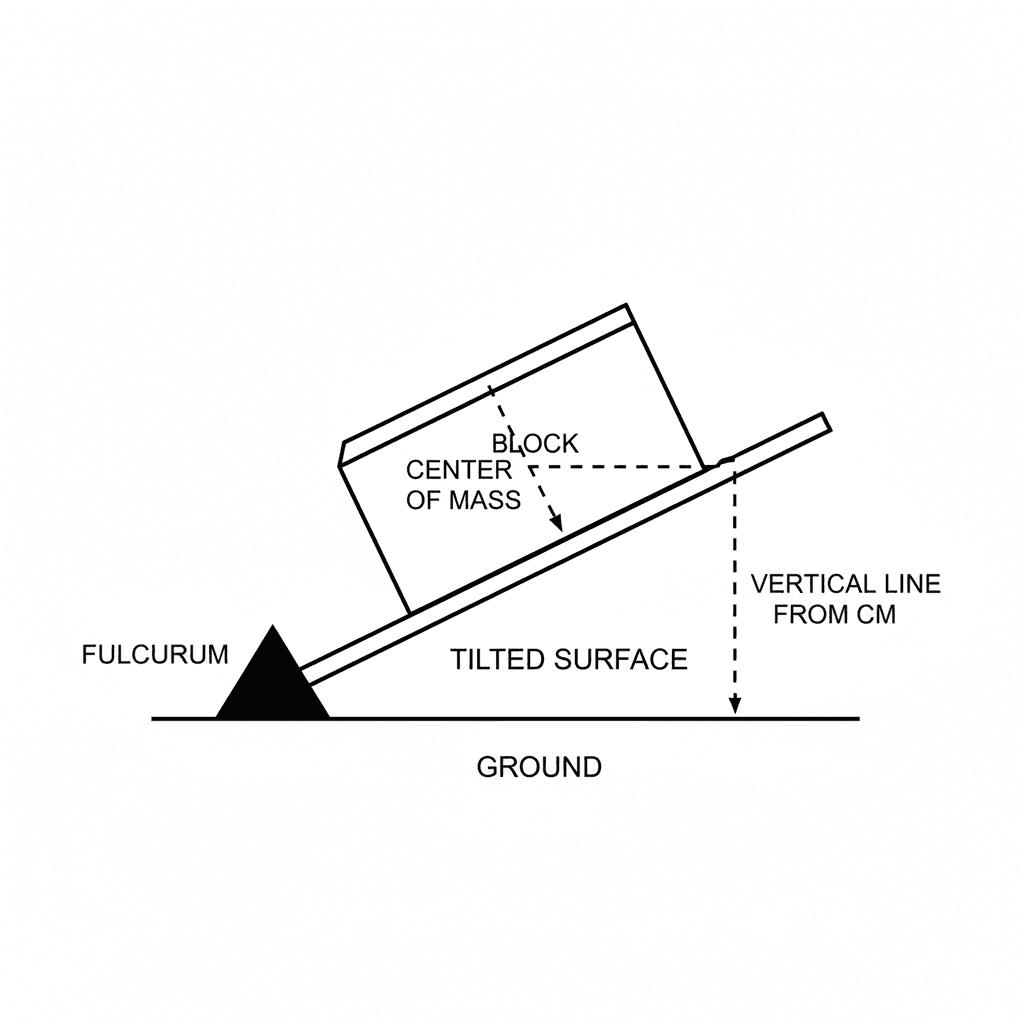
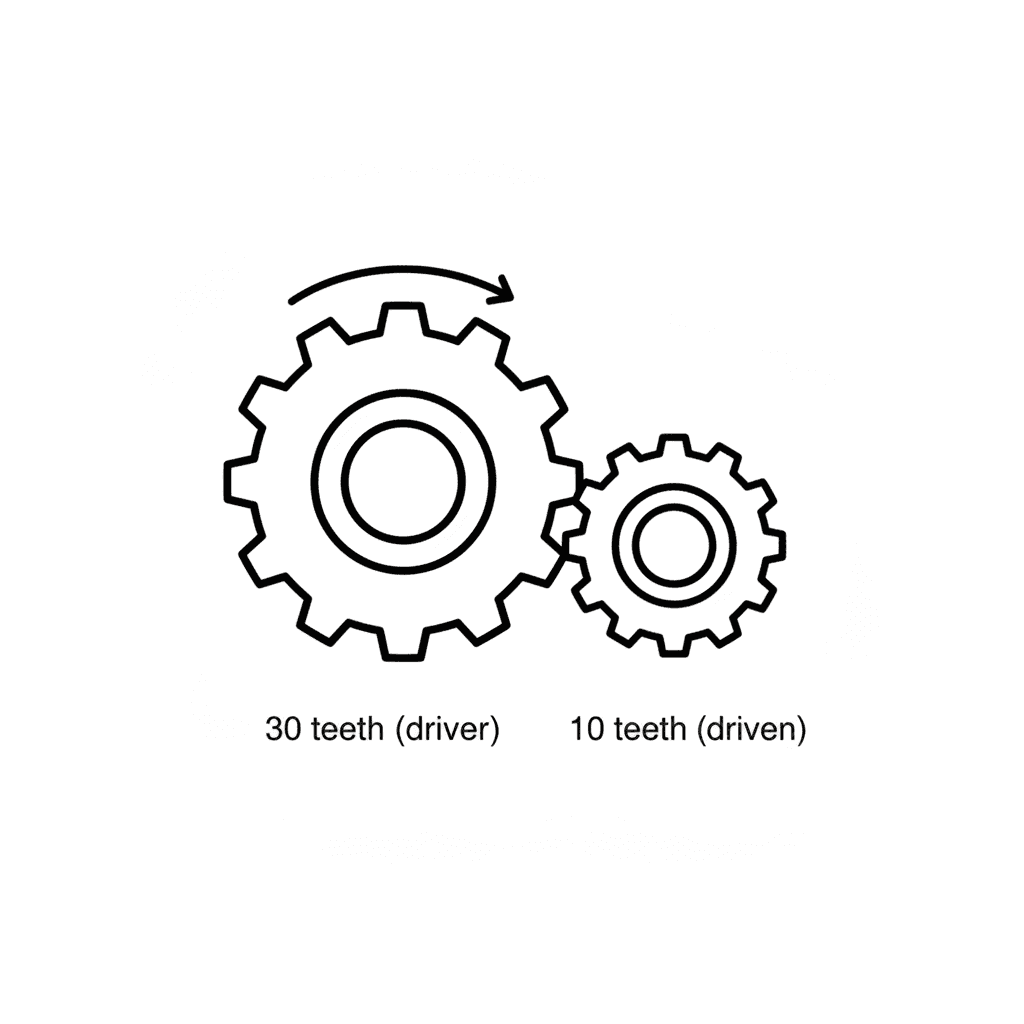
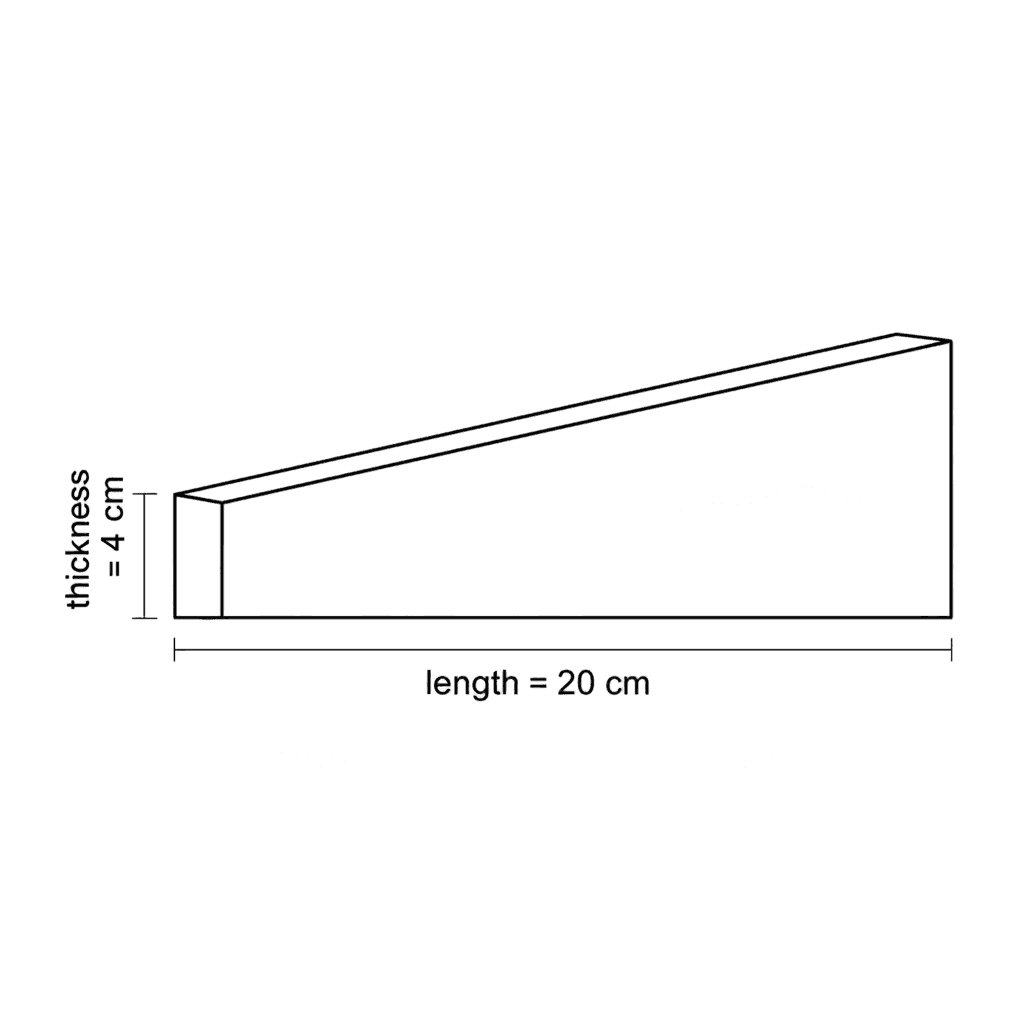
PrepClubs ships 288 Ramsay MAT-4 items across 7 full-length mocks. Per-concept scoring shows whether pulleys, gears, or hydraulics are draining points.
Ramsay MAT-4 vs Ramsay Maintenance vs Bennett vs Wiesen: which mechanical test does your employer actually run?
All four mechanical screens look similar from a job listing. The format and audience differ enough that prep does not transfer cleanly between them.
| Spec | Ramsay MAT-4 | Ramsay Maintenance | Bennett (BMCT-II) | Wiesen (WTMA) |
|---|---|---|---|---|
| Questions | 36 | 60 | 55 | 60 |
| Time limit | 20 min | 60 min | 25 min | 30 min |
| Sec per question | 33 | 60 | 27 | 30 |
| Audience | Entry-level mechanical aptitude | Experienced maintenance techs | Mechanical, technical and engineering applicants | Skilled trade applicants |
| Job knowledge required | No | Yes (electrical, plumbing, welding, hydraulics) | No | No |
| Diagram style | Sparse, principle-only | Diagrams plus task descriptions | Color drawings, three choices | Cartoon-style line drawings |
| National average | 25 / 36 | Role-specific | Not published (percentiles only) | Around 36 / 60 |
| Heaviest employer pool | US utilities, manufacturing, auto assembly | Industrial maintenance, paper mills, mining | Mechanics, trades, maintenance, engineering | FedEx, UPS, freight, logistics, transit |
| PrepClubs questions | 288 | 480 | 440 | 320+ |
How Ramsay Corporation actually scores the MAT-4 and why national vs local matters
The two-percentile reporting model
Ramsay Corporation, the publisher behind both the MAT-4 and the longer Maintenance test, returns two percentile scores to the employer for every candidate. The first is a local percentile comparing the candidate to the applicant pool for that specific role at that specific employer. The second is a national percentile comparing the candidate to every applicant who has ever taken the MAT-4 across all Ramsay clients.
The two scores often disagree by 10 to 20 percentile points. A candidate who scores 27 might land at the 65th national percentile (above national average of 25) but only the 40th local percentile (because that employer attracts higher-scoring applicants). Most hiring managers prioritize local percentile, since it reflects how the candidate ranks against actual competition for the job.
What this means in practice: aiming for the national average of 25 is not enough at competitive employers. Major utilities, paper mills, and auto plants tend to attract candidates with technical backgrounds and prior trade exposure. The local cutoff at those employers often falls between 29 and 32 raw correct.
Why the diagrams are deliberately sparse
Ramsay strips its MAT-4 diagrams to bare lines and shapes intentionally. A pulley question shows two pulleys, a rope, and a weight. No texture, no shading, no real-world context. This forces candidates to reason from the underlying mechanical principle, which is what Ramsay claims the MAT-4 actually measures.
The result is that candidates who prep with image-rich third-party question banks often perform worse than expected on the real test. Real-world detail trains the wrong instinct. PrepClubs MAT-4 mocks honor the sparse-diagram convention so the visual style matches what shows up on test day.
The brevity also extends to question text. Most MAT-4 stems run 8 to 14 words. Candidates used to wordier exam language sometimes assume the question is asking something more complex than it actually is.
The 33-second budget and how to actually spend it
Twenty minutes divided by 36 questions is exactly 33 seconds per item. That is tight enough that pacing discipline becomes the test as much as the mechanical content. Top scorers run 18 to 22 seconds on snap-recognition pulley and lever items, 30 to 40 seconds on gear chains and hydraulics, and 5 seconds of guessing on the two or three hardest items in the bank.
Bottom-quartile candidates lose to themselves in two ways. The first is over-reading sparse diagrams. They add mental detail (real-world friction, wind resistance, elasticity) that the diagram does not contain, and they reason past the principle the question is testing. The second is letting one hard hydraulics item eat 90 seconds, which costs them three to five easier items in the back half of the test.
PrepClubs MAT-4 mocks ship with item-level pacing telemetry so candidates can see exactly which question types are eating their clock and adjust prep accordingly.
Build the rest of your prep stack
MAT-4 scoring: raw plus two percentile comparisons
The MAT-4 is scored as raw correct out of 36. The national average is approximately 25 correct. Ramsay Corporation returns two percentile comparisons to the employer: a local score comparing the candidate to other applicants for the same role, and a national score comparing the candidate to all applicants who have ever taken the test.
There is no universal passing score. Each employer sets its own cutoff based on applicant-pool quality. A rough guideline: to rank competitively at most major manufacturers and utilities, a raw score of 29 or better puts you in the top 20 to 30 percent nationally. 32 or better puts you in the top 10 percent, where you will likely be in the shortlist at any employer.
There is no wrong-answer penalty, so guess on every item. The clock is tight enough that most candidates leave 2 to 4 items unanswered if they do not pace deliberately. Filling every bubble at the 20-minute mark is free expected value. Skipping hard items and returning is a valid strategy if you watch the clock.
Who uses the Ramsay MAT?
The Ramsay MAT-4 is used across US utilities, manufacturing, and industrial hiring for entry-level mechanical roles. Utilities and paper mills use it heavily, as do auto assembly operations.
A focused 7-day MAT-4 prep plan
Day 1: Diagnostic and timing
Take a 36-item timed mock cold. Record your raw score and note which 2 concept areas you missed the most. Also note how many items you left blank. The clock is the test as much as the content.
Day 2: Pulleys and levers
These two categories account for roughly a third of the test. Drill 20 items each. Learn the single rule for each: count supporting ropes for pulleys, torque balance for levers. Do not memorize formulas. Build visual intuition.
Day 3: Gears and belt drives
Smaller gear spins faster. Crossed belts reverse direction. Middle gears in a chain cancel for speed ratio but affect direction count. 20 items with mixed gear and belt configurations.
Day 4: Fluid dynamics, basic physics, and electricity
The remaining concept areas, combined. Pressure equals force over area for hydraulics. Larger pipe diameter equals more flow. Series circuits have one path; parallel circuits have multiple. 25 mixed items.
Day 5: Full timed mock
36 items in 20 minutes. Do not pause. Record pacing at item 12 and item 24. Most first-timers run out of time around item 28 to 32.
Day 6: Error drill and speed practice
Redo every wrong answer from Day 5 untimed. Then do a 15-item sprint in 6 minutes. The sprint teaches you to commit to an answer in 25 seconds and move, which is the real MAT-4 skill.
Day 7: Light review and rest
Re-skim your concept notes. No new items. Sleep 8 hours. Mechanical reasoning is pattern recognition, and a tired brain conflates pulleys and gears.
Three MAT-4 mistakes that keep candidates below the 29 threshold
Over-reading the sparse diagrams
Ramsay strips diagrams to the core principle. If you start adding mental detail (real-world friction, wind, elasticity), you will over-reason. Apply the single principle the diagram is testing and move.
Ignoring the speed component
33 seconds per item. If you are spending 60 seconds on anything, you are losing items later. Mark hard items, guess, and return if time allows. Never let one item eat 2 minutes.
Skipping the electricity and household-physics categories
Candidates without electrical or hands-on backgrounds often skip these in prep. They are only 6 to 10 of the 36 items, but skipping them is a 6 to 10 point ceiling on your score. Drill them early.
Related reading
Ramsay MAT FAQs
A score tells you how you did. The coach tells you what to practice next.
After every test you get a short plan built from your own answers and seconds: which sections cost you points, which ones eat your clock, and the drill that fixes each.
Math: 11 of 12 right, at 31 s a question
Drill math against a 20 s clock. That frees about 2 minutes per test for the sections you miss more.
People who got the same questions right took 20 s.
Illustrative data
- Every section mapped on accuracy against speed, with one fix for each
- The questions that ate your time, and the clock checkpoints to hit next time
- Where rushing costs you, and the point to guess and move on
- A read that sharpens with every test you take
Your pacing report is free with your first test.
33 seconds per question. Build the intuition before the clock starts.
Timed 36-item MAT-4 simulations with national-percentile feedback and per-concept scoring.
Start prepping