
PI Cognitive Assessment: How to Prep for 50 Questions in 12 Minutes
The Predictive Index Cognitive Assessment, still called the PLI by most recruiters, is the shortest high-stakes cognitive test in mainstream hiring. Twelve minutes. Fifty questions. No one finishes. Your target is not completion. It is beating the role-specific cutoff your employer has quietly set.
By PrepClubs Editorial Team, updated April 18, 2026
The PI Cognitive Assessment, sometimes called the PLI, is a 50-question, 12-minute cognitive ability screen published by The Predictive Index and used by 8,000-plus employers globally. It interleaves numerical reasoning, verbal reasoning, and abstract reasoning items without warning. The test-wide average raw score is 20 out of 50. Predictive Index publishes a Target Score calculator that maps each role to a band: roughly 14 to 18 for entry-level sales, 20 to 25 for analysts and operators, 27 to 32 for strategy, finance, and senior leadership.
Source: The Predictive Index official documentation (predictiveindex.com) and the PI Target Score framework.
Built for the role-target framework, not just the average
What the PI Cognitive Assessment measures
The PI Cognitive Assessment, owned by The Predictive Index, is used by 8,000+ employers globally. It is most common in sales-heavy organizations, manufacturing leadership, and mid-market retail. Nissan, Subway franchise hiring, LVMH, DocuSign, and Blue Cross Blue Shield plans all run it routinely.
The test is three-sectioned but the sections are interleaved: numerical reasoning (word problems, basic algebra, ratios), verbal reasoning (antonyms, analogies, short deductions), and abstract reasoning (shape sequences, matrix puzzles, odd-one-out). Each section contributes roughly a third of the questions.
What makes the PI different from the CCAT is the role-specific target score framework. PI gives employers a "Target Score" calculator based on job complexity, and most employers use the calculator output verbatim. That means the cutoff for a sales rep is around 14 to 18, while the cutoff for a financial analyst is 24 to 28.
The three sections and their quirks
The PI sections do NOT appear in blocks. Expect interleaved questions that force rapid mental context switches.
Numerical Reasoning
Percentages, ratios, rate problems, simple algebra. Most numerical questions here are solvable in 20 seconds if you spot the shortcut. The trap is long-form word problems that hide simple arithmetic behind three sentences of context.
Verbal Reasoning
Antonyms and analogies dominate. Vocabulary is roughly GRE-lite. Short passage-based deductions show up but are rare. Skim, commit, move.
Abstract Reasoning
Visual pattern sequences, matrix completion, and odd-one-out. The PI abstract questions are notably faster than Raven-style ones: 15 to 20 seconds each is enough if you have drilled the patterns.
Adaptive feel, non-adaptive reality
Some candidates swear the PI is adaptive. It is not technically adaptive, but item ordering is optimized by The Predictive Index to reveal your ceiling faster. In practice, questions 30 to 40 are where most candidates stall.
Real PI Cognitive question examples
Three items pulled from the PrepClubs PI Cognitive bank, the same pool 3,700+ students have used. The actual PI mixes these three families across 50 items in 12 minutes with no section breaks.
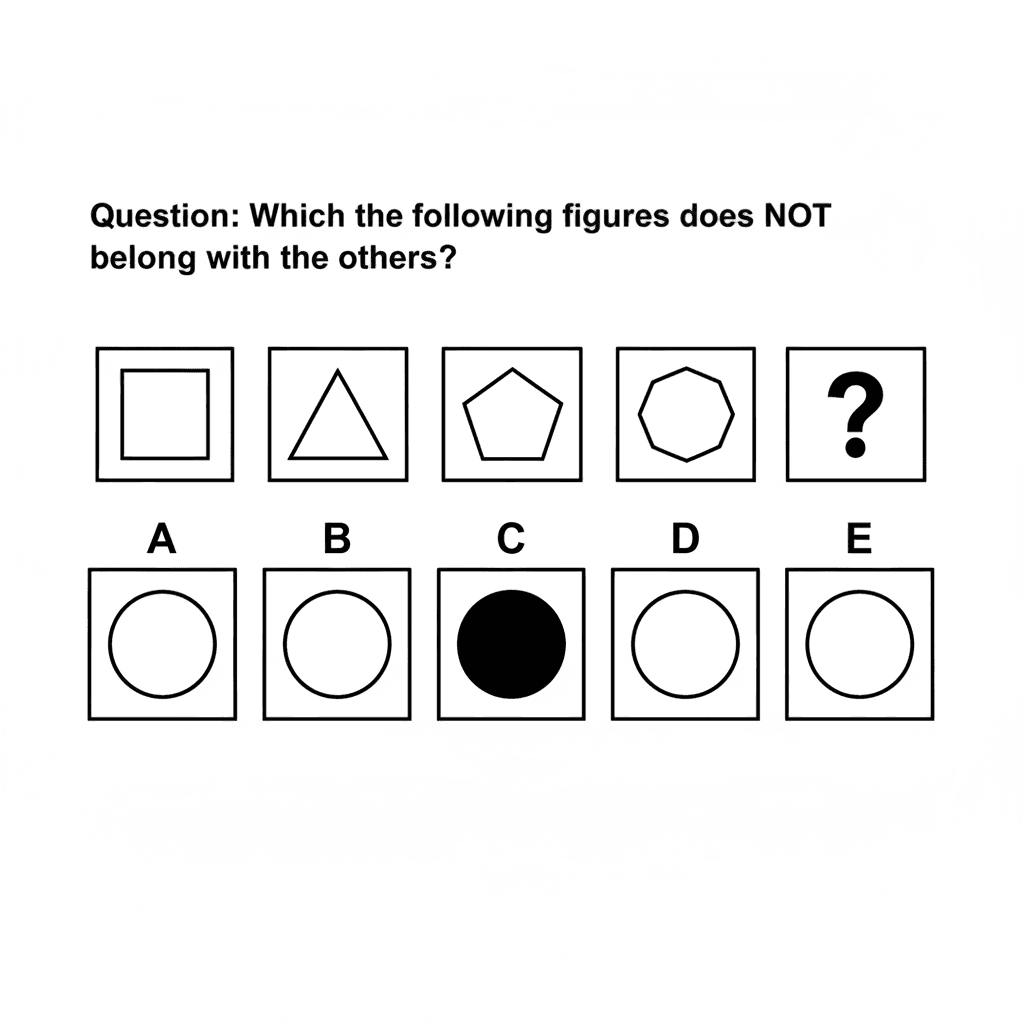
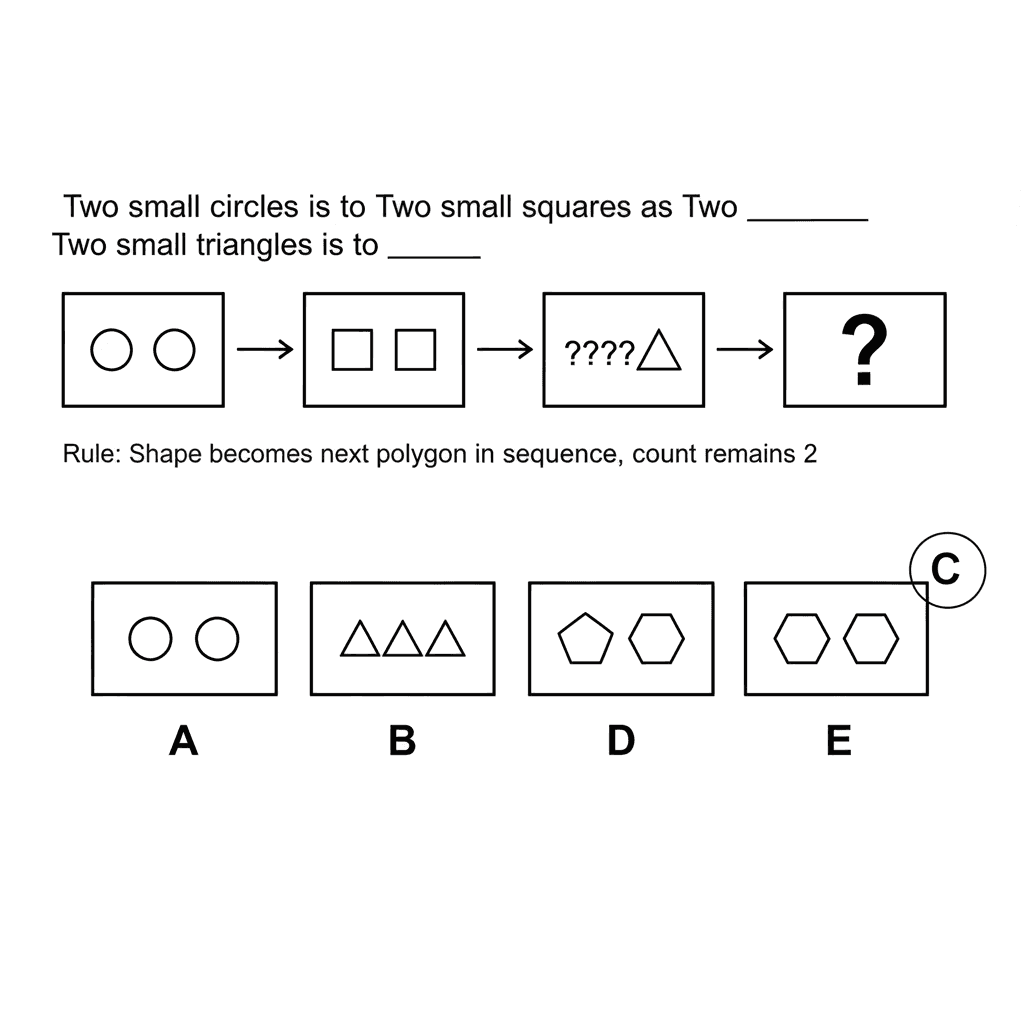
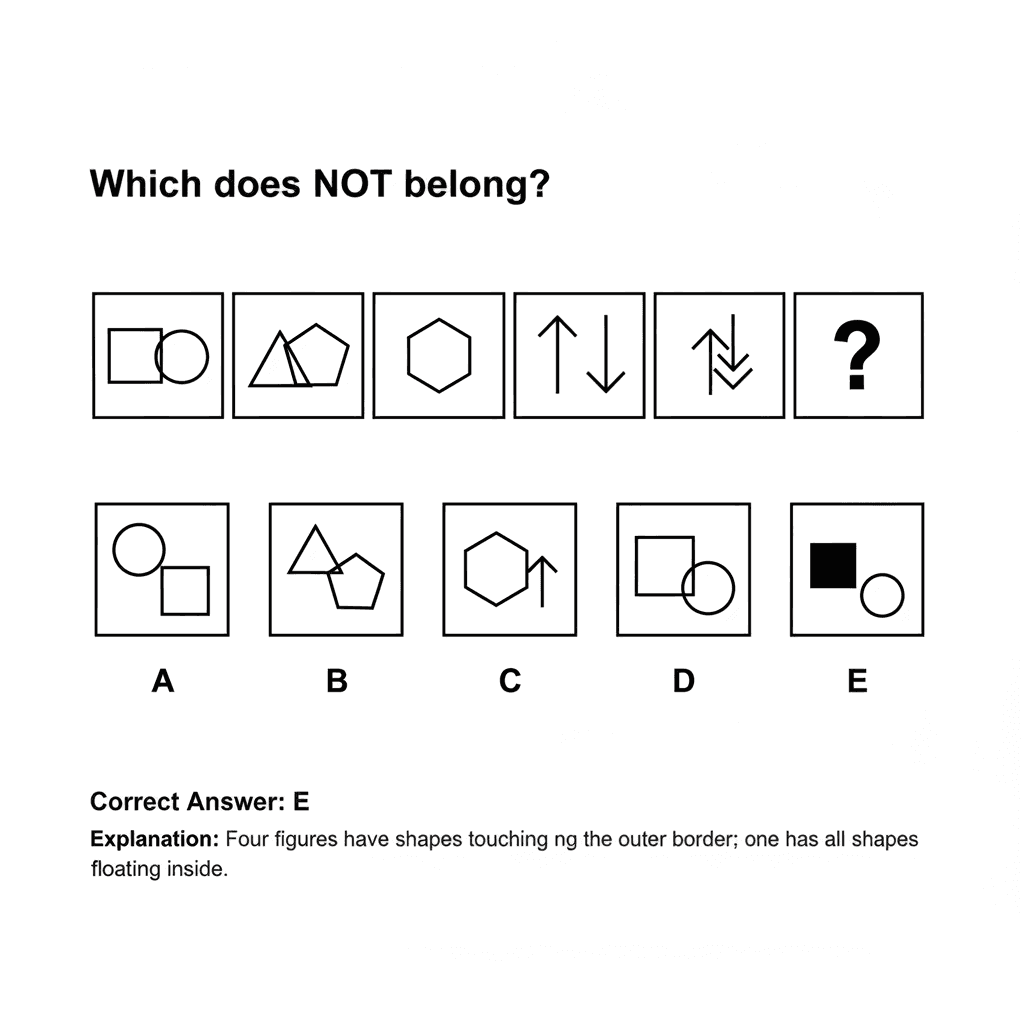
PrepClubs ships 400 PI-style items across 7 full-length mocks, all reviewable with answer walkthroughs.
PI Cognitive vs CCAT vs Wonderlic: which 50-question speed test will you actually face?
All three crunch 50 items into a tight window. The differences hide in the section mix and the cutoff philosophy.
| Spec | PI Cognitive | CCAT | Wonderlic |
|---|---|---|---|
| Questions | 50 | 50 | 50 |
| Time limit | 12 min | 15 min | 12 min |
| Seconds per question | 14.4 | 18 | 14.4 |
| Sections | Numerical, verbal, abstract | Verbal, math, spatial | Mixed (no announced sections) |
| Average raw score | 20 / 50 | 24 / 50 | 20 / 50 |
| Cutoff philosophy | Role-specific Target Score | Role-specific percentile | Role band published by vendor |
| Heaviest employer pool | Sales, retail, manufacturing | Vista Equity SaaS portfolio | NFL, retail, logistics, insurance |
| Calculator allowed | No | No | No |
| Wrong-answer penalty | No | No | No |
| PrepClubs questions | 400+ | 1,350+ | 400+ |
Inside the PI Target Score: why two candidates with the same raw score get different verdicts
How the Target Score is calculated
When an employer enters a role into the Predictive Index platform, PI auto-suggests a Target Score using a job-complexity assessment. The complexity scoring rolls up factors such as decision authority, ambiguity, learning curve, and stakeholder count. PI then maps the complexity rating to a target band on the 1-to-50 raw-score scale.
The result is a recommended cutoff like "20 to 22" or "27 to 30." Most employers use the band verbatim. A small minority adjust by one or two points based on hiring volume or feedback from prior cohorts. The candidate never sees the band on the test invitation, which is why so many candidates underestimate the bar.
The practical implication: two candidates can both score 23, and one passes (a sales rep target band of 18 to 22 means 23 is comfortably above) while the other fails (a strategy role target band of 27 to 30 means 23 is well below).
Why Predictive Index sells PI as "non-adaptive but optimized"
PI is technically non-adaptive: every candidate sees the same 50 items in the same order. But the order is not random. PI ordered the bank so that early items are calibration items (medium difficulty) and difficulty climbs roughly monotonically toward the back of the test. This produces an adaptive feel without the engineering cost of true item-response-theory adaptation.
For a candidate, this matters in two ways. First, items 1 through 10 are not "warm-up easy" items. Most candidates miss one or two and undermine their pace. Second, items 40 through 50 are where bottom-quartile candidates and top-quartile candidates separate the most. Strong test-takers often answer 4 or 5 of those last 10. Average candidates barely reach them.
PrepClubs PI mocks honor this difficulty curve so timing intuition you build in practice transfers to the real test.
The 12-minute pacing math, and where to spend the seconds
Twelve minutes divided by 50 questions is exactly 14.4 seconds per item, the same per-question budget as the Wonderlic. No human reads, computes, and answers a multi-sentence numerical word problem in 14.4 seconds. PI assumes you will skip.
Top scorers run 8 to 10 seconds on snap-judgment verbal antonyms, 18 to 22 seconds on solvable numerical items, 12 to 15 seconds on patterned abstract sequences, and zero seconds on three to five flagged hard items they guess in the final 10 seconds. This pacing yields 28 to 35 correct, which lands above the cutoff for almost every PI role band.
Bottom-quartile high-IQ candidates lose to themselves: they solve a hard numerical problem in 90 seconds, get it right, and then never reach the easier items 30 through 45. They finish with 22 correct. PI rewards skip discipline more than raw skill.
Build the rest of your prep stack
Target scores by role and the cutoff myth
Raw score is the number correct out of 50. There is no wrong-answer penalty, so guessing on every blank is mandatory in the final 10 seconds. The average raw score across all candidates is 20.
The Predictive Index publishes a "Target Score" framework that maps roles to expected score bands. The usual pattern: entry-level sales or retail roles target 14 to 18 (roughly 40th to 55th percentile), mid-level analyst and operations roles target 20 to 25, and senior strategy or investment roles target 27 to 32 (roughly 90th percentile).
Most candidates assume a 20 is "passing" because it matches the stated average. It is not. Many employers set the cutoff at or above the Target Score for the specific role, so a 20 for a role targeting 25 fails the screen even though it is above the test-wide average.
Who uses the PI Cognitive?
The PI shows up heavily in sales, retail, and financial services. If you are interviewing at Nissan, a large Subway franchise, DocuSign, or a Blue Cross plan, expect it.
A tight 5-day PI prep plan
Day 1: Baseline and section analysis
Run one full-length timed mock. Calculate your per-section hit rate. Most first-timers score 55 to 65 percent on verbal, 45 to 55 percent on numerical, and 60 to 70 percent on abstract. Whichever section is furthest below your average is your focus.
Day 2: Verbal speed drilling
Verbal is where most candidates over-read. Drill 15-question antonym and analogy sets at 4 minutes each. The goal is snap-judgment accuracy, not certainty.
Day 3: Numerical shortcut library
Build a list of 10 mental-math shortcuts (percent-of-percent, ratio-to-ratio, work-rate formula). Drill 20 numerical questions, time each at 20 seconds. If you need more than 25 seconds, mark it as a skip candidate.
Day 4: Abstract pattern exposure
Abstract reasoning reuses 5 to 7 underlying patterns. Do 40 questions across matrices, sequences, and odd-one-out. Catalog which pattern tripped you up. Revisit only those.
Day 5: Role-specific mock and rest
Morning: one clean 12-minute mock. Afternoon: rest. Do not take another practice in the 24 hours before your real test.
The three biggest PI mistakes
Prepping like it is the Wonderlic
Wonderlic gives you 14.4 seconds per question. The PI gives you 14.4 also, but the questions skew slightly harder in abstract. Prep that ignores the harder abstract mix costs 3 to 5 points on the real test.
Ignoring your role Target Score
Scoring 22 feels fine until you learn the role targeted 26. Ask your recruiter or check the PI Target Score calculator for the role family before you set your prep goal.
Over-attempting questions 40 through 50
Questions in the tail are typically harder and typically unreached. Better to add 2 correct in the first 30 than attempt 2 in the last 10 where your accuracy is lower.
Related reading
PI Cognitive FAQs
Twelve minutes is not a lot of margin. Prep accordingly.
Full-length timed PI practice. Role-specific target-score calibration.
Start prepping