Free Practice Test

Free Bennett Mechanical Comprehension Test Practice: BMCT-II Simulation

The Bennett Mechanical Comprehension Test is the oldest mechanical aptitude test still in hiring use, first published in 1940 and now in its second major revision (BMCT-II). This free simulation covers the 68-item, 30-minute format used by Boeing, GE, Siemens, Lockheed Martin, Ford, and most US heavy manufacturing hiring.

Questions
68
Time Limit
30 min
Difficulty
Medium
Cost
$0
Start Free Bennett Practice

What this free Bennett Mechanical practice includes

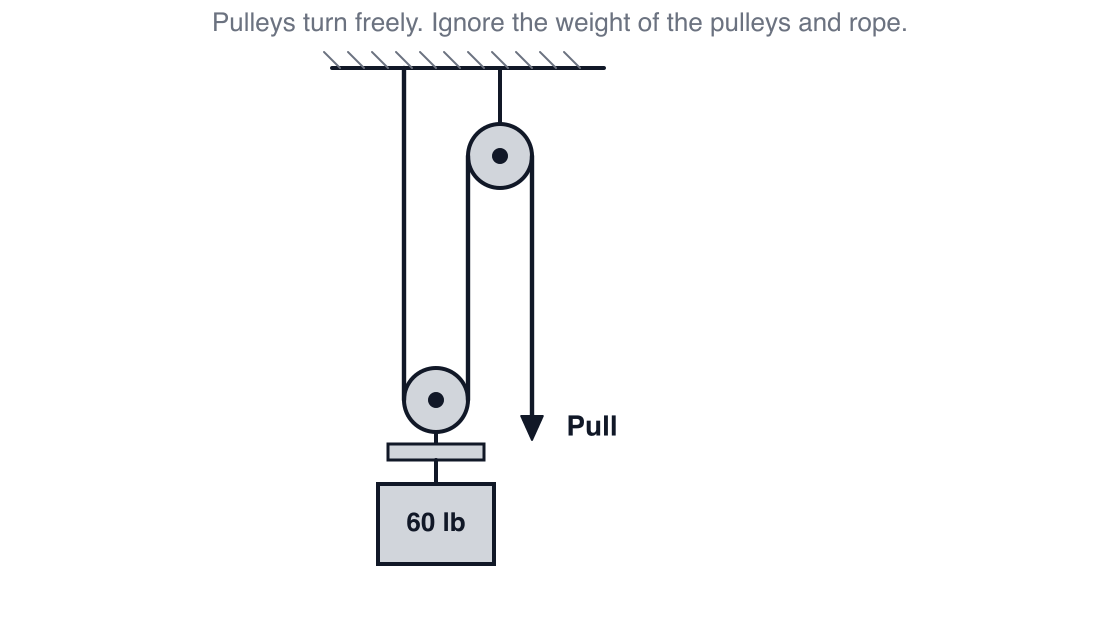
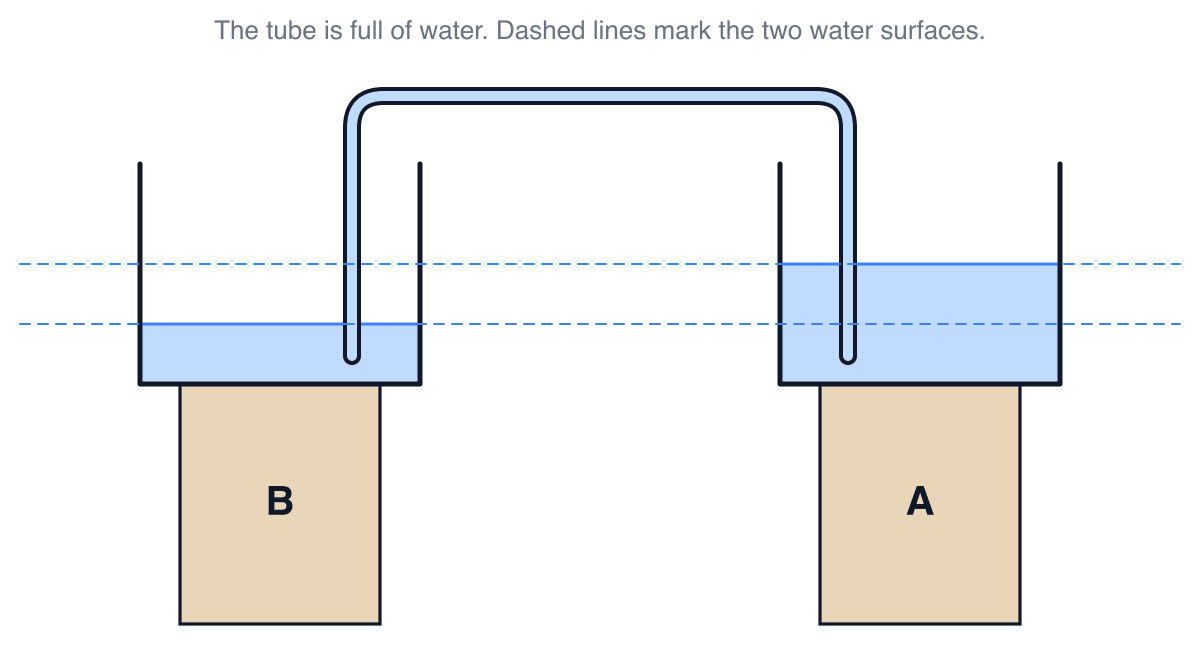
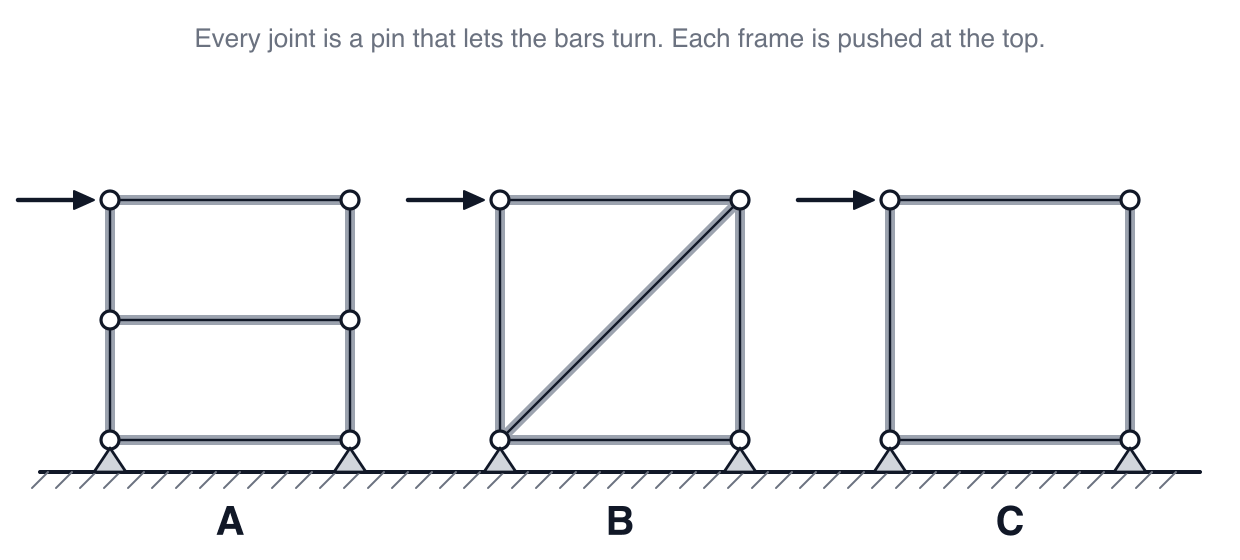
The BMCT-II measures understanding of physical principles most people learn by doing rather than by studying. Leverage, gears, pulleys, fluid dynamics, center of gravity, structural integrity, and spatial visualization. It is a literacy test for anyone working with physical systems: engineers, skilled tradespeople, military mechanical specialists, and manufacturing supervisors.

This free practice presents 68 items with the exact difficulty distribution of the real BMCT-II. Half of the items use straightforward mechanical principles that most engineering graduates can answer in 10 seconds. The other half require reasoning through systems with three or more interacting components. At the end, you get a raw score, a percentile against a general-population norm, and full diagrams in the answer walkthroughs.

68-item BMCT-II format
Matches the real Bennett Mechanical Comprehension Test II item count exactly.
30-minute timer
Strict clock, matching real administration. Roughly 25 seconds per item.
Diagram-based walkthroughs
Every missed item includes an annotated diagram showing how the mechanical principle applies.
Employer-norm overlay
See your score mapped against typical cutoffs at Boeing, GE, Siemens, and Ford hiring thresholds.
First attempt free
Your first simulation is anonymous. No signup or credit card.

Three sample Bennett Mechanical questions with walkthroughs

BMCT-II items are always diagram-based in the real test. Text descriptions here still walk the same physical reasoning.

Sample 1: Leverage
A lever is balanced on a pivot point. On the left side, a 12 kg weight is placed 2 meters from the pivot. On the right side, a weight is placed 3 meters from the pivot. What weight on the right side will balance the lever?
  • A.6 kg
  • B.8 kg
  • C.9 kg
  • D.12 kg
  • E.18 kg
Answer and walkthrough
B. Balance requires that the torque on both sides is equal. Left side: 12 times 2 equals 24 kg-meters. Right side: weight times 3 must equal 24, so weight equals 8 kg. BMCT-II leverage items always use this simple torque formula. If you see a lever diagram, multiply weight by distance on each side and set them equal.
Sample 2: Gears
Gear A has 24 teeth and rotates clockwise at 60 RPM. Gear A meshes directly with Gear B (which has 40 teeth). Gear B meshes directly with Gear C (which has 20 teeth). In which direction and at what speed does Gear C rotate?
  • A.Clockwise at 30 RPM
  • B.Clockwise at 72 RPM
  • C.Counterclockwise at 36 RPM
  • D.Clockwise at 48 RPM
  • E.Counterclockwise at 72 RPM
Answer and walkthrough
B. Direction: each meshed gear reverses direction. A is clockwise, B is counterclockwise, C is clockwise. Speed: gear ratio. A to B: 24/40 ratio means B rotates at 60 times 24/40 equals 36 RPM. B to C: 40/20 ratio means C rotates at 36 times 40/20 equals 72 RPM. The key insight is that the intermediate gear (B) cancels out for the speed calculation: the A-to-C ratio is simply 24/20 times 60 equals 72 RPM. Direction still reverses twice, so C is same direction as A.
Sample 3: Fluid Dynamics
A water tank is connected to two outflow pipes. Pipe 1 has a diameter of 2 cm, and Pipe 2 has a diameter of 4 cm. Both pipes are at the same depth below water level. Which pipe discharges more water per second?
  • A.Pipe 1 discharges more.
  • B.Pipe 2 discharges more.
  • C.Both discharge equally.
  • D.Depends on the water temperature.
  • E.Cannot be determined without more information.
Answer and walkthrough
B. Flow rate is proportional to cross-sectional area, which is proportional to the square of the diameter. Pipe 2 has 4 times the cross-sectional area of Pipe 1 (since 4 squared divided by 2 squared equals 4). At the same depth, the pressure is equal, so the larger pipe discharges 4 times as much water per second. BMCT-II fluid items always reduce to: larger cross-section equals more flow at equal pressure.

What the real BMCT-II feels like

The real Bennett Mechanical Comprehension Test II is delivered through Pearson TalentLens or through an employer-branded portal. Every item is diagram-based: you see a physical scenario illustrated, and you pick the answer that describes the correct physical outcome. The interface is clean: one diagram, 3 to 5 answer choices, a clock, and a next button.

Boeing uses the BMCT-II as a screening gate for engineering and technician roles at both commercial and defense divisions. GE uses it for manufacturing supervisor hiring. Siemens uses it for technical sales and field engineer hiring. Lockheed Martin uses it for mechanical specialist roles, particularly at the Skunk Works and classified program divisions where the security clearance process filters on measurable technical literacy.

The typical hiring cutoff is the 60th to 70th percentile against a general population norm. For engineering roles at Boeing and Lockheed, the cutoff is closer to 80th percentile. Unlike cognitive speed tests, the BMCT-II is not primarily a timing test. Candidates who have a strong physical-intuition base typically finish with time to spare. The weakness for most candidates is not speed, it is recognizing which mechanical principle applies to a given diagram.

Bennett practice FAQs

Mechanical principles you learned by doing, tested in 30 minutes.

Free BMCT-II simulation with annotated diagram walkthroughs.

Start Free Bennett Practice